Local Garage Door Repair Service in Greenwich 06830, Connecticut
Local garage door repair service in Greenwich, Connecticut 06830 for an opener that hums, reverses or stops mid-travel. The door cannot be trusted until the door is tested by hand.
What is happening here
In Greenwich (06830), the change usually shows up on an ordinary morning: a door that used to rise smoothly now needs a second effort, and the opener sounds strained in a way it did not sound last month.
The most likely cause on this page is an opener that hums, reverses or stops mid-travel. A drive gear that grinds, a logic board that responds intermittently, a sensor knocked out of line and a remote with a dead battery all look alike from the driveway, and each is tested in turn. Until the cause is known, the safest move is to stop using the opener entirely; a strained opener can bend a track or snap a cable while the real fault is still undiagnosed.
How the local climate wears a door
Coastal salt air in Connecticut corrodes cables and fasteners, so cable condition is checked on every visit.
Repeated daily use, where the garage door is often the household's main entrance, consumes spring cycles faster than occasional use.
Snow piled against the bottom of the door adds weight and drag on the first open of the day, and clearing it before running the opener protects both the spring and the opener.
What delay costs
Running the opener against a broken spring forces the motor and rail to carry weight they were not built to carry, and it can snap a cable. Every extra cycle on a failing spring is a cycle closer to a sudden break, and a break at the wrong moment leaves the door stuck exactly when it is needed.
How the repair is carried out
- Disconnect the opener and test the door by hand to separate a spring or track problem from an opener problem.
- Diagnose the opener in turn: drive gear, logic board, sensors, remote and keypad, and force and travel settings.
- Repair or replace the faulty opener part, reset limits where needed, and test the safety reverse.
- Explain which part failed and why, and what symptom would point to a spring problem next time instead of an opener problem.
Three things that decide whether this job is done right
- Door type and weight: A double-width door serving a two-car garage weighs substantially more than a single-width door, so its spring specification is worked out from the door's actual weight, not from its width alone. That weight decides the spring specification for any repair.
- Local wear factor: Coastal salt air in Connecticut corrodes cables and fasteners, so cable condition is checked on every visit. That is why the same symptom is checked differently here than in a milder climate.
- First check: The spring state above the door is checked first, because a broken spring changes every other diagnosis.
What to decide before the visit
The decision the homeowner makes is not which part to buy, but whether the door is safe to use until the visit, and the answer is usually to leave it where it is and disconnect the opener.
Remote batteries and the wall button can be tested separately: if the wall button works but the remote does not, the remote is the problem, not the opener.
Questions customers ask about this problem
Who fixes garage door opener fault in Greenwich (06830)?
Call (877) 318-0816 for garage door opener fault help. A drive gear that grinds, a logic board that responds intermittently, a sensor knocked out of line and a remote with a dead battery all look alike from the driveway, and each is tested in turn. If adjustment cannot hold a balance, the spring itself is usually fatigued, and replacement, not more adjustment, is the honest recommendation.
Should I replace the opener or repair it?
The balance test is run with the opener disconnected at several heights, not just at halfway. A homeowner can check whether the door sits level when it stops, because a door that stops crooked has a cable or tension imbalance, not an opener fault.
Can I adjust the springs myself?
No. Torsion springs hold enough tension to cause serious injury, and extension springs under load are also dangerous. The balance test is a safe homeowner check; winding or tensioning is technician work. The decision the homeowner makes is not which part to buy, but whether the door is safe to use until the visit, and the answer is usually to leave it where it is and disconnect the opener.
Call for Greenwich 06830
Call (877) 318-0816 for garage door opener fault help in Greenwich 06830.
Service page for this problem: Garage Door Opener Repair. State hub: Connecticut. Symptom guide: Symptom Triage.
Neighbouring ZIP pages:
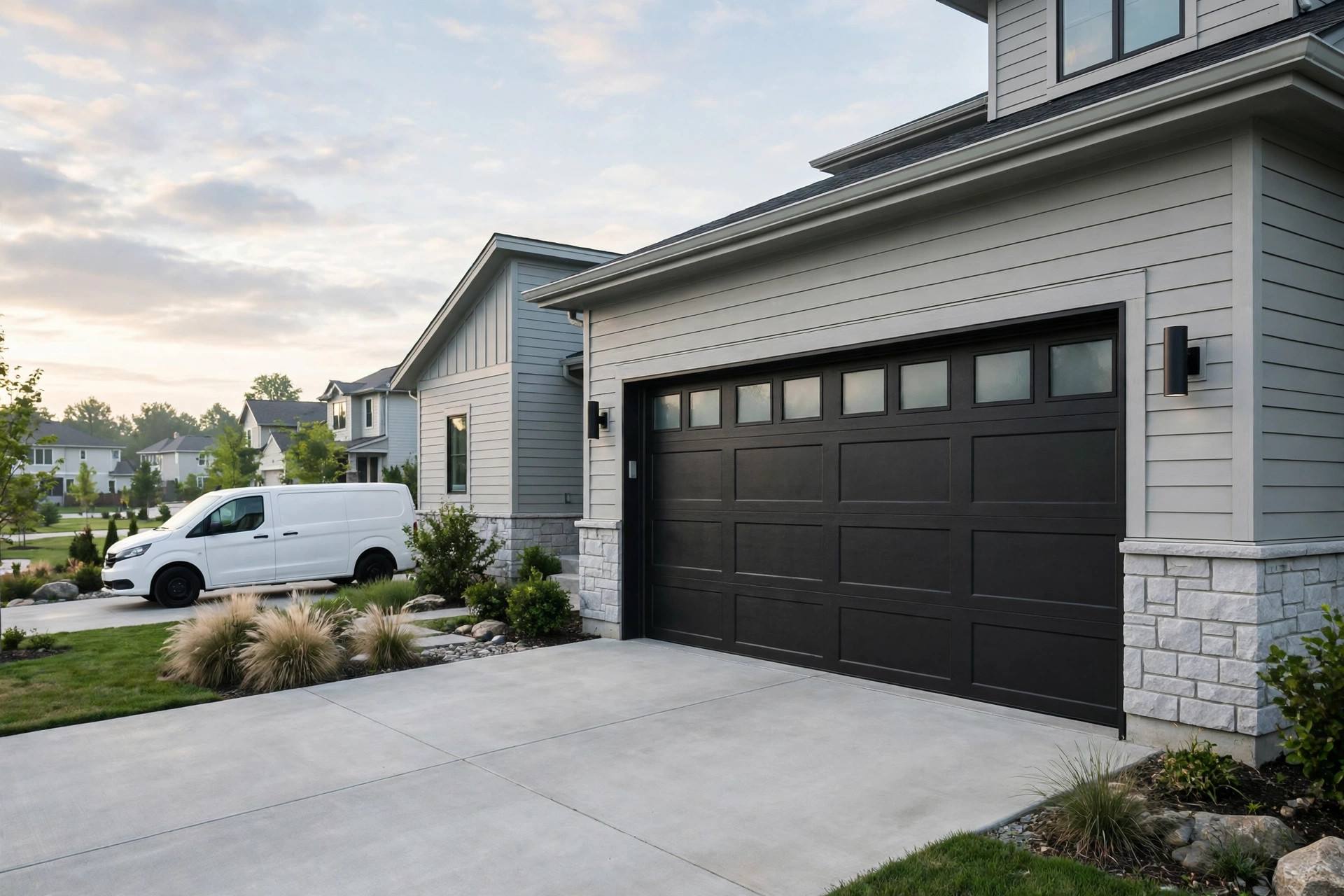
The photo on this page is a representative garage-door image, not a verified photo of this business's own jobs.